Huawei Unveils 10 AI-Optical Network Innovations at MWC Shanghai 2026
Consumer Tech
By Business Wire | Date: 20 Nov 2026 | 5 Mins Read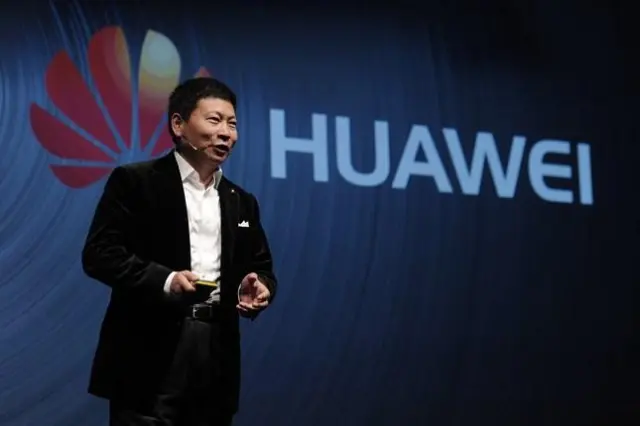
Huawei has introduced 10 new AI-Optical Network (AI-ON) products and solutions at the AI-ON Summit during MWC Shanghai 2026, highlighting the growing convergence of artificial intelligence and advanced optical networking. The announcements focus on strengthening high-speed connectivity, improving computing access, and supporting the expansion of AI-powered digital services.
Held under the theme “Networks for AI, AI for Networks,” the summit brought together telecom industry representatives, research organizations, operators, and technology partners to discuss how optical infrastructure must evolve to support increasingly demanding AI workloads.
The discussions also explored the emerging concept of Token monetization and its potential to create new value opportunities for telecommunications providers as AI adoption expands.
AI-ON Summit Highlights the Changing Role of Optical Networks
The summit examined how telecommunications infrastructure is moving beyond conventional connectivity services toward intelligent, AI-enabled network environments.
As AI applications and distributed computing become more widespread, networks need to support higher bandwidth, lower latency, and reliable connections between computing resources. Ultra-gigabit broadband and 10 Gbps services were highlighted as important components of this transition.
Huawei's AI-ON strategy focuses on combining optical connectivity with intelligent network capabilities to support these evolving requirements across consumer and enterprise environments.
Huawei Introduces 10 AI-ON Products and Solutions
Huawei presented a portfolio of 10 innovations designed to accelerate the development of AI-centric all-optical networks.
For residential connectivity, the company highlighted AI-FTTR solutions, including AI home hubs, AI smart boxes, and Wi-Fi 7-based fiber-to-the-room systems. These technologies are intended to improve in-home connectivity and support higher-performance digital experiences.
To address growing bandwidth requirements, Huawei introduced a high-density 50G PON service board for commercial deployment. It also upgraded its FTTR portfolio with tri-band Wi-Fi 7 configurations to support faster and more capable home networks.
The company also presented solutions designed for low-latency computing networks, including Mini OXC, OSU/fgOTN integration, and OTN technologies with quantum key distribution (QKD) capabilities.
For data center interconnection, Huawei expanded its offerings with ultra-large optical transport network (OTN) cluster solutions and integrated submarine-terrestrial systems. Additional resilience-focused technologies included AI DAS and 50 ms wavelength switched optical network (WSON) capabilities.
Together, these developments are intended to support more scalable, high-capacity, and resilient optical infrastructure.
Optical Networks and the Emerging Token Monetization Model
A major discussion at the summit centered on Token monetization as a potential new approach to generating value from telecommunications infrastructure.
With AI services increasingly relying on large-scale computing resources and data exchange, operators are exploring ways to move beyond traditional connectivity-based revenue models. Intelligent network services and computing connectivity could create opportunities for new service offerings.
The International Telecommunication Union's ION-2030 vision for next-generation optical networks also provides an industry framework for examining the future convergence of AI and optical technologies.
The discussions emphasized the importance of distributed computing, support for large AI models, and autonomous network evolution in enabling this transformation.
Telecom Operators Explore AI-Driven Network Services
Several operators and industry participants, including China Mobile, China Telecom, China Unicom, Zain Jordan, and Shunwang Technology, shared examples of AI-driven network deployments.
Their experiences covered improved home broadband services, proactive network management, and integrated computing-network offerings for enterprise customers.
The focus is increasingly shifting toward generating greater value from existing infrastructure. Operators are looking at ways to improve bandwidth quality, introduce additional services, and build AI-powered digital ecosystems that can support sustainable business growth.
These developments highlight the growing role of intelligent networking in telecommunications strategies.
Building the Foundation for AI-Centric Connectivity
The AI-ON approach positions optical networks as a critical foundation for future AI-driven services. By bringing together high-speed connectivity, computing infrastructure, and intelligent automation, telecom providers can prepare their networks for applications that require substantial bandwidth and low-latency access.
Huawei's latest announcements reflect a broader industry effort to evolve optical infrastructure alongside AI technologies. The combination of 50G PON, Wi-Fi 7, advanced optical transport, and resilient network systems is intended to support the next generation of consumer and enterprise connectivity.
As AI adoption continues to expand, the ability to deliver scalable and dependable network infrastructure will become increasingly important for digital services, industrial applications, and distributed computing environments.